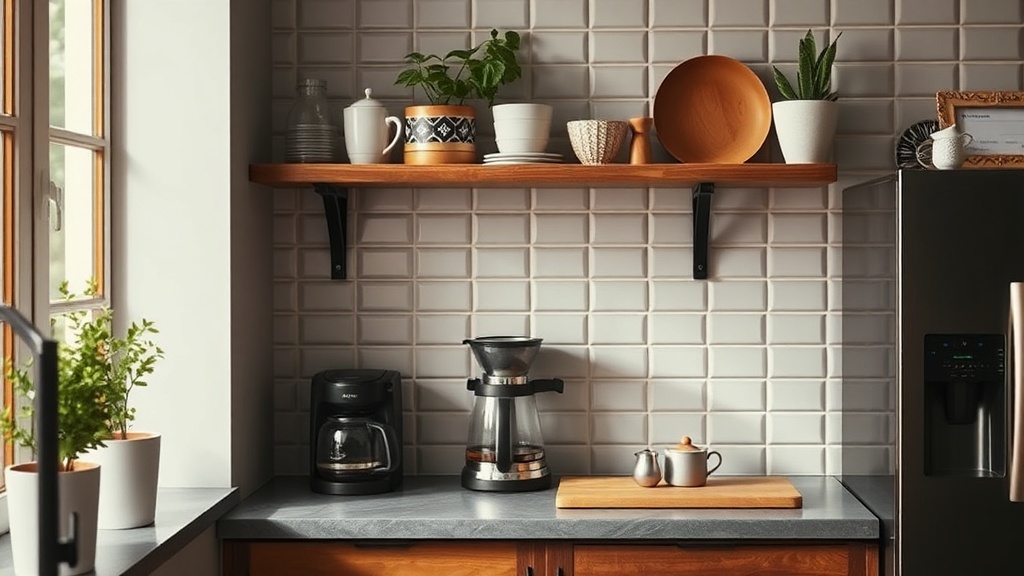
Curating a Functional Coffee Station in Small Kitchens

This guide provides practical strategies for designing a high-functioning coffee station within the limited footprint of a small kitchen. You'll learn how to select the right appliances, organize small-scale accessories, and maintain a clutter-free aesthetic that respects the principles of minimal design. We'll look at spatial layouts, vertical storage solutions, and the specific gear you need to make a ritual out of your morning caffeine.
In a small kitchen, every square inch counts. You don't have the luxury of a sprawling breakfast nook or a dedicated pantry room. Instead, you have a corner of a countertop or a small stretch of a landing strip. The goal isn't just to fit a machine in there; it's to create a zone that feels intentional rather than cramped.
How Much Counter Space Do I Need for a Coffee Station?
You generally need at least 18 to 24 inches of linear counter space to accommodate a standard coffee maker and a small tray. This allows enough room for the machine itself, a bit of clearance for pouring water, and a small area for your mug. If you're using a larger machine like a Breville Barista Express, you'll want to account for the extra width of the grinder and the knock box.
If your counters are truly tiny, don't panic. You can move the "station" away from the main prep area. A small rolling cart or a dedicated sideboard can act as a dedicated coffee station, keeping your main kitchen counters clear for actual cooking. This is a great way to separate your "ritual" space from your "utility" space.
Consider these three layout types:
- The Corner Nook: Uses an L-shaped corner to tuck the machine away.
- The Vertical Stack: Uses a tiered shelf or a small rack to keep the footprint small.
- The Mobile Cart: A way to move the station to where you need it (or hide it in a corner when guests arrive).
What Are the Best Small-Scale Coffee Accessories?
The best accessories for a small coffee station are those that serve multiple purposes or have a very small footprint. When you're working with limited space, you can't have a dozen different gadgets sitting out. You want tools that look good and do their jobs efficiently.
I've found that a single, high-quality tray is the best way to "ground" the station. Instead of having various bottles of syrups and sugar packets scattered, place them on a tray. This visually organizes the chaos. It's a simple trick, but it works wonders for making a cluttered corner look like a deliberate design choice.
Here is a comparison of common coffee gear based on space requirements:
| Appliance/Tool | Space Footprint | Primary Function |
|---|---|---|
| Single Serve Pod Machine | Small (approx. 6" x 12") | Speed and convenience |
| Pour-Over Dripper (Hario V60) | Minimal (fits in a drawer) | Precision and ritual |
| Electric Gooseneck Kettle | Medium (approx. 8" x 10") | Temperature control |
| Milk Frother (Handheld) | Negligible | Texturing milk |
One thing to watch out for is the height of your cabinets. If you have low-hanging upper cabinets, you might not be able to use a tall pour-over kettle or a large espresso machine. Always measure the distance from your countertop to the bottom of the cabinet before you buy anything. It's a common mistake that leads to a machine that simply won't fit.
Organizing by Frequency of Use
Group your items by how often you touch them. Your daily driver—maybe a Chemex or a Nespresso—should be the center of attention. Items you use once a week, like a specific flavored syrup, can live in a drawer or a back corner. This keeps the "active" area of your station clean and uncluttered.
If you're looking to create a more serene atmosphere, you might want to look into creating a calming sanctuary with natural textures. Using wooden trays or ceramic-ware instead of plastic or metal can help the station feel like a part of your home rather than a piece of office equipment.
How Can I Hide My Coffee Station When Not In Use?
The most effective way to hide a coffee station is to use a "hidden" area like a pantry corner or a dedicated cabinet. If you can't hide it, use visual cues to make it look intentional. A well-organized station looks like a design choice; a messy one looks like a pile of junk.
Here are a few ways to manage the visual weight of your station:
- Use Uniform Containers: Instead of keeping coffee in the original colorful bags, move beans into airtight glass or ceramic canisters. This creates a cohesive look.
- The Tray Method: As mentioned before, a tray defines the boundaries of the station. It tells the eye, "This is one single unit," rather than "There are five random things on the counter."
- Go Vertical: Use a small two-tier shelf. Put your machine on the bottom and your mugs or beans on the top. This uses the air space above the machine rather than more counter space.
- Cable Management: Nothing ruins a minimal aesthetic faster than a tangle of black wires. Use clips or cord organizers to tuck the wires behind the machine or the backsplash.
If you're a person who hates seeing the "clutter" of a kitchen during the evening, consider a station that can be tucked into a cabinet. Many modern coffee makers are designed with a slim profile specifically for this reason. If you can pull the machine out, use it, and then put it back in the cupboard, you've effectively reclaimed your counter space for the rest of the day.
The goal is to make the ritual of making coffee feel special. Whether you're using a simple French press or a high-end espresso machine, the space around it should feel calm. When you have a dedicated, organized spot, you're not just making a drink—you're setting the tone for your morning.