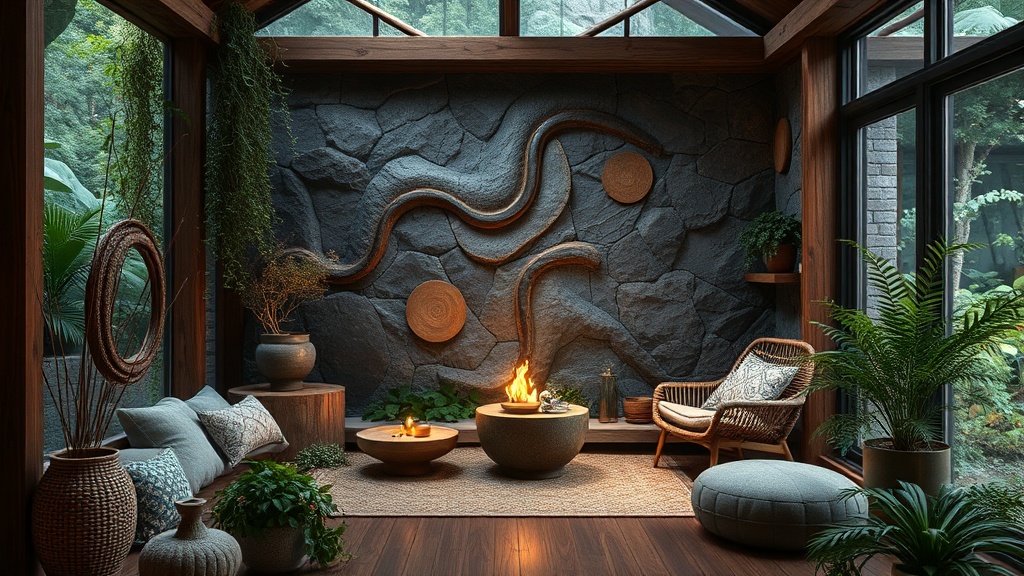
Creating a Calming Sanctuary with Natural Textures

Do you ever feel like your home is visually "loud" even when it's quiet? This guide covers how to use natural textures—like wood, stone, linen, and wool—to create a sense of calm through tactile variety rather than color or pattern. We'll look at why texture matters for your nervous system and how to layer these materials without making a room feel cluttered.
Most people try to fix a chaotic room by adding more decor. That's a mistake. Usually, the problem isn't the amount of stuff; it's the lack of sensory cohesion. When everything in a room is smooth, shiny, or synthetic, the eye has nowhere to rest. Natural textures provide a "visual rest" that helps lower stress levels.
Why Does Texture Matter in Interior Design?
Texture matters because it provides tactile depth and breaks up the monotony of flat surfaces. While color sets the mood, texture sets the physical feeling of a space. A room with a single texture—say, a polished hardwood floor and a leather sofa—can feel cold and sterile. By introducing a chunky wool rug or a linen throw, you introduce warmth and softness.
There is actually a scientific basis for this. Research into biophilic design—the practice of connecting indoor spaces to the natural world—suggests that humans respond positively to organic shapes and materials. According to the Wikipedia entry on biophilic design, integrating natural elements can improve cognitive function and reduce physiological stress.
It's not just about looks. It's about how your body reacts to the environment. Think about the difference between sitting on a plastic chair and a linen-upholstered armchair. One feels temporary and clinical; the other feels grounded.
The Three Layers of Texture
To get this right, you need to think in layers. You can't just throw one textured item in a room and call it a day. You need a foundation, a middle layer, and an accent layer.
- The Foundation: These are your large, immovable surfaces like flooring, walls, and large furniture pieces. Think reclaimed wood floors or a matte plaster wall finish.
- The Middle Layer: These are the items that cover your foundation. This includes area rugs, window treatments (like heavy linen curtains), and upholstery.
- The Accent Layer: These are the small, tactile details. We're talking about ceramic vases, woven baskets, and textured throw pillows.
If you get the foundation right, the rest follows much more easily. If your floor is a high-gloss tile, you'll need a much larger, more substantial rug to "soften" the room's energy.
What Are the Best Natural Materials for a Minimalist Home?
The best materials for a minimalist, calming home are wood, stone, linen, and wool. These materials are durable, age gracefully, and possess inherent imperfections that make a space feel lived-in rather than a showroom. Unlike synthetic materials, these elements develop a patina over time—which is a good thing.
Here is a breakdown of how to use these specific materials effectively:
| Material | Best Use Case | Visual Effect | Maintenance Level |
|---|---|---|---|
| Linen | Bedding, Curtains, Pillows | Soft, relaxed, airy | Low (wrinkles are part of the look) |
| Oak or Walnut | Coffee Tables, Shelving, Flooring | Grounded, warm, sturdy | Medium (requires occasional oiling) |
| Wool | Area Rugs, Throws | Cozy, heavy, substantial | Medium (needs vacuuming) |
| Stone/Travertine | Side Tables, Trays, Coasters | Solid, cool, permanent | High (can be porous) |
When choosing wood, I always suggest looking at the grain. A heavy, visible grain in a dark walnut table adds a lot of "weight" to a room. If your room feels too "floaty" or light, a darker, more textured wood can anchor the space. (Don't go too dark if the room lacks natural light, though—that's a recipe for a cave.)
For textiles, linen is your best friend. It has a natural tendency to wrinkle, which actually helps it look more organic. A crisp, stiff cotton can sometimes feel too formal or "perfect" for a sanctuary. You want things that look like they could be touched.
How Do I Mix Different Textures Without Overwhelming the Space?
You mix textures by following the rule of contrast: pair something smooth with something rough. If you have a sleek, mid-century modern sideboard with a smooth finish, place a rough-hewn ceramic vase or a textured stone bowl on top. This creates a balanced tension that keeps the eye moving without causing visual fatigue.
The secret is to keep your color palette tight. If you use too many different textures and too many different colors, the room will look cluttered. If you keep the colors neutral—whites, beiges, soft greys, or earthy ochres—you can be much more aggressive with your textures. A monochromatic room with a lot of texture looks expensive and intentional. A multicolored room with a lot of texture looks messy.
Here is a quick checklist to use when you're styling a coffee table or a shelf:
- Start with a hard surface: A wooden tray or a stone slab.
- Add a soft element: A small stack of linen-bound books or a textured ceramic candle.
- Introduce height and organic shape: A branch in a matte glass vase or a textured clay vessel.
- Check the "Touch Test": Look at the arrangement and ask yourself: "Would I want to touch all of these things?" If the answer is no, you're missing a layer.
One thing to watch out for is "texture overload" in small rooms. If you have a jute rug, linen curtains, a velvet sofa, and a stone coffee table, a small living room might start to feel claustrophobic. In smaller spaces, pick one "hero" texture and let the others be much more subtle.
For example, if you have a chunky jute rug, maybe stick to smooth cotton pillows instead of heavy velvet. It gives the eyes a break. You don't want every single surface competing for attention. It's a delicate balance.
If you're looking for high-quality, long-lasting textiles, I often recommend looking at brands that prioritize natural fibers. For instance, Patagonia is famous for their high-quality wool and recycled materials in their outdoor gear, and that same standard of durability is what you should look for in home goods. You want materials that won't pill or degrade after three months of use.
Another thing—don't be afraid of the "imperfect." A handmade ceramic mug with a slightly uneven rim adds more character to a kitchen than a perfectly symmetrical, mass-produced one. That slight irregularity is what makes a house feel like a home. It's the human element. It's the opposite of the sterile, "perfect" aesthetic often seen on social media—which, let's be honest, is usually a lie anyway.
When you're shopping, look at the labels. If a product is listed as "linen-feel" or "faux-wood," skip it. Those are usually synthetic blends that won't have the same depth or aging properties as the real thing. You're building a sanctuary, not a temporary setup. Buy better, buy less, and focus on the way a material feels under your hands. That's the real goal.