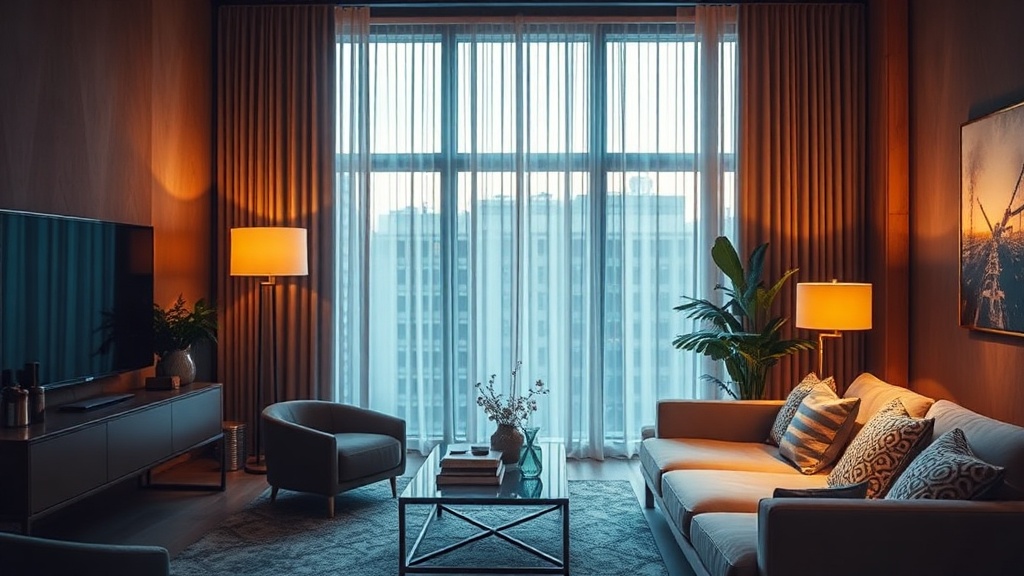
Choosing the Right Lighting Layers for Your Space

You will learn how to layer ambient, task, and accent lighting to create depth and functionality in your home. This guide breaks down the three distinct layers of light, how to select the right color temperature for different rooms, and how to avoid the common mistake of relying on a single overhead source. Good lighting isn't just about brightness; it's about how light interacts with your furniture and your mood.
What are the three layers of lighting?
The three layers of lighting are ambient, task, and accent lighting. Most people stop after the first one, which is why a room can feel flat or clinical even if it's well-lit. To get a professional look, you need to mix these three types of light sources.
Ambient Lighting: The Foundation
Ambient lighting provides the general illumination for a room. It's the base layer that allows you to move around safely without tripping. Think of it as the "default" setting for your space. This usually comes from ceiling-mounted fixtures like a central chandelier or recessed can lights.
Don't overdo it. If your ambient light is too bright, the room will feel like a hospital wing. If it's too dim, the room feels gloomy. You want a soft, even glow that fills the volume of the room without being aggressive. If you're working with high ceilings, you might need more powerful sources, but always aim for a diffused look.
Task Lighting: The Functional Layer
Task lighting is directional and focused. It exists to help you perform specific activities like reading, cooking, or applying makeup. Without it, you'll end up straining your eyes or hunching over your kitchen counter to see what you're chopping.
Common examples include:
- Under-cabinet lights: Essential for seeing your workspace in the kitchen.
- Desk lamps: For focused work or studying.
- Pendant lights: Positioned over a dining table or kitchen island.
- Reading lights: Attached to a bed or a floor lamp near an armchair.
A good rule of thumb is that task lighting should be bright enough to see clearly but not so bright that it creates harsh glares on your screens or surfaces.
Accent Lighting: The Visual Interest
Accent lighting is used to draw the eye to a specific feature or object. It adds drama and depth. While ambient light fills the room, accent light creates highlights and shadows. This is where your interior design really starts to feel "designed."
You might use a picture light over a piece of art, or a small spotlight directed at a textured wall. It's also a great way to highlight a plant or a sculptural object on a sideboard. If you've ever felt like a room looks "empty" despite having plenty of furniture, you're likely missing this layer.
How do I choose the right color temperature?
You should choose a color temperature based on the specific function of the room and the time of day. Light is measured in Kelvins (K), and the number tells you how "warm" or "cool" the light looks.
A common mistake is using "Daylight" bulbs (5000K+) in a living room. This makes a space feel cold and sterile. For a cozy, residential feel, you want to stick to the warmer end of the spectrum.
| Temperature (Kelvin) | Light Appearance | Best Use Case |
|---|---|---|
| 2700K - 3000K | Warm/Yellow | Living rooms, bedrooms, dining rooms |
| 3500K - 4100K | Neutral/Cool White | Kitchens, bathrooms, workspaces |
| 5000K+ | Daylight/Blue | Garages, high-detail craft rooms |
In a bedroom, you want a low Kelvin count to help your body prepare for sleep. In a kitchen, you might want something a bit crisper—around 3500K—so you can actually see the colors of your food.
It's worth noting that mixing temperatures in one room can be tricky. If you have a warm 2700K lamp next to a 5000K recessed light, the room will feel disjointed. Try to keep your layers within a reasonable range of each other.
How much light do I actually need in a room?
The amount of light you need depends on the square footage of the room and the specific tasks being performed. This is often measured in lumens, which is the total amount of visible light emitted by a source.
A common way to calculate this is by looking at the foot-candles or lumens per square foot. For example, a kitchen requires more light than a bedroom. If you're working on a kitchen counter, you need high intensity. If you're lounging on a sofa, you need much less.
If you find yourself constantly turning on every single light in the house just to feel comfortable, your layout is likely flawed. You might be relying too heavily on a single, high-wattage bulb in the center of the room. This creates a "cave effect" where the center is bright, but the corners are pitch black.
To fix this, instead of one big light, use several smaller light sources. A floor lamp in a corner, a small table lamp on a side table, and perhaps some dimmable recessed lighting. This spreads the light more evenly.
Check the Wikipedia page on Lumens if you want to get technical about how light intensity is measured. It's a helpful resource for understanding the physics behind the glow.
One thing to keep in mind: don't forget the impact of your walls. A dark-colored wall will absorb light, while a white wall will reflect it. If you've recently painted your walls a darker shade—perhaps after learning why you shouldn't use the same white everywhere—you'll likely need more light sources to combat the absorption.
Where should I place my lights?
Placement is everything. If you put a lamp in the wrong spot, it can create shadows that make a room feel smaller or more cluttered than it actually is.
- The Kitchen: Place task lighting directly under cabinets to illuminate the countertop. Avoid placing a pendant light so low that it blocks your line of sight while prepping food.
- The Living Room: Use a mix of floor lamps and table lamps to create "pools" of light. This makes the room feel much more inviting than a single bright ceiling light.
- The Dining Room: The dining table should be the focal point. A low-hanging pendant or a chandelier helps define the space, but make sure it doesn't interfere with conversation.
- The Entryway: A small wall sconce or a slim console lamp can make a transition from the outdoors feel intentional.
If your furniture feels awkward, it might not just be the layout. If your lighting is poorly placed, it can make a perfectly good furniture arrangement look "off." For instance, if your lamp is casting a shadow over your coffee table, you'll never feel comfortable reading there. You might want to look at my post on why your furniture layout feels off to see if the light is actually the culprit.
A pro tip: always use dimmers. If you can't hardwire dimmers into your ceiling lights, buy smart bulbs like the Philips Hue line. They allow you to change the brightness and even the color temperature from your phone. It's a simple way to change the mood of a room without rewiring your entire house.
Lighting is the most underrated tool in an interior designer's kit. It's the difference between a house that feels like a showroom and a home that feels lived-in. Start with the ambient layer, add a functional task light where you need it, and then use accent lighting to bring the room to life.
Steps
- 1
Establish Ambient Base Lighting
- 2
Add Functional Task Lighting
- 3
Introduce Decorative Accent Lighting
- 4
Coordinate Color Temperatures