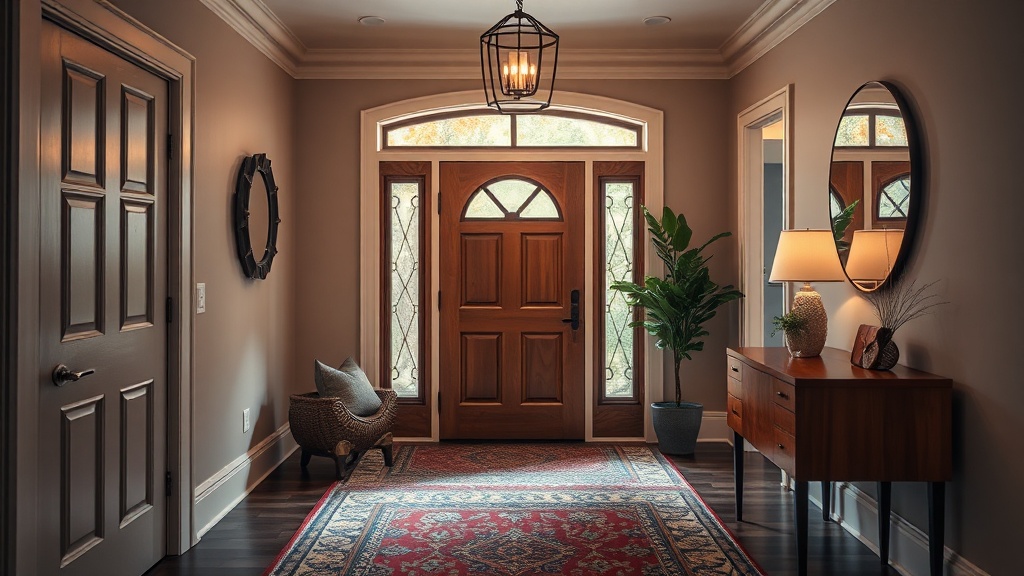
Building a High-Functioning Entryway with Limited Space

You walk through the front door carrying three grocery bags, a heavy laptop case, and a wet umbrella, only to trip over a stray pair of sneakers and a pile of unopened mail on the floor. This isn't just a mess; it's a failure of design. A high-functioning entryway acts as a decompression chamber between the chaos of the outside world and the calm of your home. This post explores how to design a high-utility entry system when you're working with a tiny footprint or a narrow hallway.
Most people treat the entryway as an afterthought, but it's actually the most important transition zone in your house. If you don't get the layout right, the clutter follows you into the living room and ruins your mood. We're going to look at vertical storage, smart furniture choices, and how to keep the floor clear.
How Do You Maximize Small Entryway Storage?
Maximizing a small entryway requires moving your storage from the floor to the walls. When floor space is limited, verticality becomes your best friend. Instead of a bulky console table that eats up walking room, look for wall-mounted solutions that keep the ground clear.
Floating shelves are a great way to add surface area without the visual weight of a heavy piece of furniture. You can use them for keys, sunglasses, or even a small plant to add some life to the space. A wall-mounted shelf from a brand like IKEA can be inexpensive and easy to install, but make sure you check your wall type first (drywall versus studs) before drilling.
Consider these three vertical layers:
- The Eye-Level Zone: This is for things you grab every day—keys, wallets, and mail. A small wall-mounted tray or a minimalist hook system works best here.
- The Mid-Zone: This is for outerwear. Instead of a heavy coat rack that looks like a mountain of fabric, try a slim-profile wall hook or a single high-quality peg.
- The Lower Zone: This is where things usually go wrong. Instead of a pile of shoes, use a low-profile shoe rack or a single-tier bench that provides seating while keeping the floor organized.
If you're working with a very narrow hallway, avoid anything that protrudes more than a few inches. A narrow bench or a simple wall-mounted ledge is much better than a standard-sized chair. It keeps the "flow" of the room open—and we've all seen how a bulky piece of furniture can make a hallway feel like a claustrophobic tunnel.
What Are the Best Furniture Pieces for Narrow Entryways?
The best furniture for a narrow entryway is pieces that serve more than one purpose or have a very slim profile. You want items that provide utility without blocking the path of travel. If you have to turn sideways to pass your console table, the table is too big.
Look for "apartment-sized" or "narrow" furniture. A slim console table might be only 10 or 12 inches deep, which is a massive difference compared to a standard 18-inch table. If you want to go even more minimalist, skip the table entirely and use a wall-mounted shelf. This keeps the floor visible, which actually makes the room feel larger (a trick often used by interior designers to create an illusion of space).
| Furniture Type | Pros | Cons |
|---|---|---|
| Floating Console | Keeps floor clear; looks modern. | Limited surface area. |
| Slim Bench | Provides seating; sturdy. | Can look heavy in tiny spaces. |
| Wall Hooks | Zero footprint; very cheap. | Doesn't provide a surface for mail/keys. |
| Tiered Shoe Rack | Organizes footwear; easy access. | Can look cluttered if not managed. |
A great tip is to look for "floating" furniture. Anything that doesn't touch the ground—whether it's a floating shelf or a wall-mounted cabinet—creates a sense of lightness. It prevents the entryway from feeling "heavy" or cramped. If you're looking for something durable, a solid wood bench from a maker like West Elm can provide a sense of permanence and quality without the bulk of a traditional entryway chest.
How Much Space Do You Need for a Functional Entryway?
You don't need a dedicated room; you only need enough space to perform three specific actions: dropping your keys, taking off your shoes, and hanging your coat. Even a tiny 3-foot section of a hallway can function as an entryway if the organization is intentional.
The "rules" of space are less about square footage and more about the "clearance zone." You need enough room to stand comfortably while putting on a shoe without hitting the wall or a piece of furniture. If your hallway is under 36 inches wide, you should probably stick to wall-mounted hooks and a very slim shoe cubby. Anything else will make the space feel cramped and frustrating to use.
Here is a quick checklist to see if your space is working:
- Can I walk through this space without turning my shoulders?
- Is there a specific "landing spot" for my keys and wallet?
- Are my shoes tucked away or scattered?
- Is the lighting bright enough to see what I'm doing?
Lighting is a big part of this. A dark entryway feels smaller and more cluttered than it actually is. If you can't hardwire a new light fixture, a small, battery-operated LED sconce can work wonders. It adds a layer of warmth and makes the transition into your home feel intentional rather than accidental.
One thing to keep in mind: don't over-decorate. In a small space, a single large piece of art or a single beautiful vase is much better than five small knick-knacks. Small items create "visual noise," which is the enemy of a minimal design. If you're already struggling with clutter, don't add more items to the surface of your console table. A single, high-quality ceramic bowl for your keys is much cleaner than a tray full of loose change and receipts.
If you've already mastered your entryway, you might find that your next challenge is the rest of the house. I've written about organizing a workspace when you're ready to move from the entryway to the home office. The principles of organization and clear surfaces are essentially the same, whether you're at a desk or at the front door.
The goal isn't to buy more stuff—it's to ensure the stuff you have has a permanent, designated home. When every item has a place, the entryway stops being a dumping ground and starts being a functional part of your home's architecture.
Steps
- 1
Define Your Drop Zones
- 2
Select Multi-Functional Furniture
- 3
Implement Vertical Storage Solutions