Why Your Living Room Feels Cold and How to Fix It

This post covers the specific reasons your living space feels sterile and provides practical methods to add warmth through texture, lighting, and color.
A living room that feels "too clean" is often a room that lacks soul. You might have the high-end furniture and the expensive rugs, but if the room feels uninviting, it's usually because you've prioritized a sterile aesthetic over a lived-in feeling. We're looking at how to move away from that hospital-like atmosphere without adding unnecessary clutter. It's about the balance between a clean look and a cozy environment.
Often, the problem stems from a lack of tactile variety. If every surface in your room is smooth—think glass coffee tables, leather sofas, and polished metal lamps—your eyes and hands have nothing to grip onto. This creates a visual and physical coldness. To fix this, you need to introduce elements that invite touch and break up those hard, reflective surfaces.
Does a minimalist home have to feel cold?
No, and that's a common misconception. Minimalism is about intentionality, not emptiness. A room feels cold when it lacks layers. Think about a single sheet on a bed versus a fully made bed with a duvet, a throw, and a few pillows. The latter feels finished; the former feels unfinished. In a living room, this translates to textiles. A heavy linen curtain or a chunky knit throw over a sleek leather chair adds weight and warmth to the visual field.
You can find excellent inspiration for textile layering through designers like Architectural Digest, where they often showcase how texture creates depth. When you layer materials—wood, wool, linen, and stone—you create a sensory experience that keeps the room from feeling like a showroom. Even if you stick to a neutral color palette, the difference between a matte ceramic vase and a glossy glass one is massive in terms of how much warmth they project.
How do I make a neutral room feel cozy?
If you love a white or beige palette, you don't have to abandon it to find coziness. The secret is in the undertones and the textures. A flat white wall can feel stark, but a white wall with a subtle plaster finish or a linen-textured wallpaper feels much softer. Instead of looking for more colors, look for more dimensions.
- Layered Rugs: Try placing a smaller, high-pile rug over a larger, flat-weave jute rug.
- Natural Materials: Introduce wood with visible grain. A coffee table with a visible wood grain feels much warmer than a white marble one.
- Organic Shapes: Sharp edges feel clinical. Look for curved furniture or round side tables to soften the room's geometry.
The goal is to create a sense of comfort through depth. When you use a monochromatic scheme, the "warmth" comes from the way light hits different textures. A velvet pillow catches light differently than a linen one, creating a soft shadow that adds visual interest without needing a bright color.
What is the best way to use lighting for warmth?
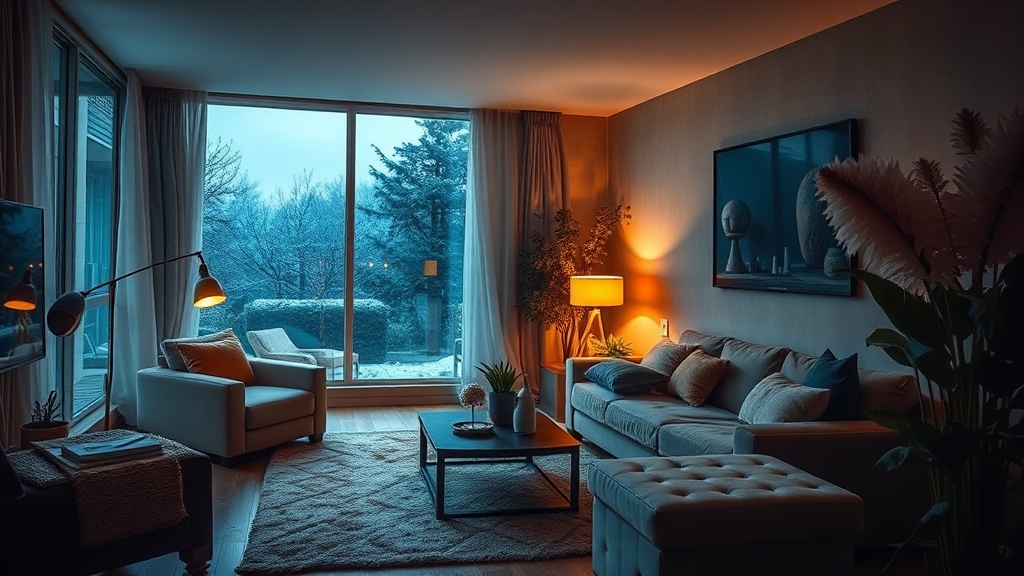
Standard overhead lighting is the enemy of a cozy living room. If you're relying on a single ceiling light, you're essentially creating a flat, harsh environment. To create a warm atmosphere, you need to think in layers. You want multiple light sources at different heights.
Table lamps, floor lamps, and even small accent lights in corners create "pockets" of light. This mimics the way natural light works and creates a sense of intimacy. For a more professional approach to lighting design, you can look at the resources provided by Energy.gov regarding how different bulb temperatures affect your space. For a living room, you generally want "warm white" bulbs (around 2700K) rather than the "daylight" bulbs that can make a room feel blue and clinical.
A well-lit room uses shadows to its advantage. A dim corner or a soft glow from a lamp creates a sense of privacy and relaxation. If you only use bright, top-down light, you lose that ability to relax. It turns your living room into a workspace rather than a sanctuary.
Creating a Curated Feel
One of the biggest mistakes people make is buying everything at once. A room that is perfectly coordinated from day one often feels artificial. To avoid this, treat your living room like a collection that grows over time. Mix an old wooden trunk with a modern sofa. Place a vintage brass bowl on a contemporary side table. These small "imperfections" or historical nods give a room its character.
A curated room tells a story. If every item is from the same collection and the same store, the room lacks a heartbeat. It's okay to have a few things that don't "match" perfectly, as long as they share a similar spirit or weight. This prevents the space from feeling like an IKEA catalog and makes it feel like a home.