Why Your Living Room Feels Cluttered Even When It Is Empty

The Myth of Empty Space
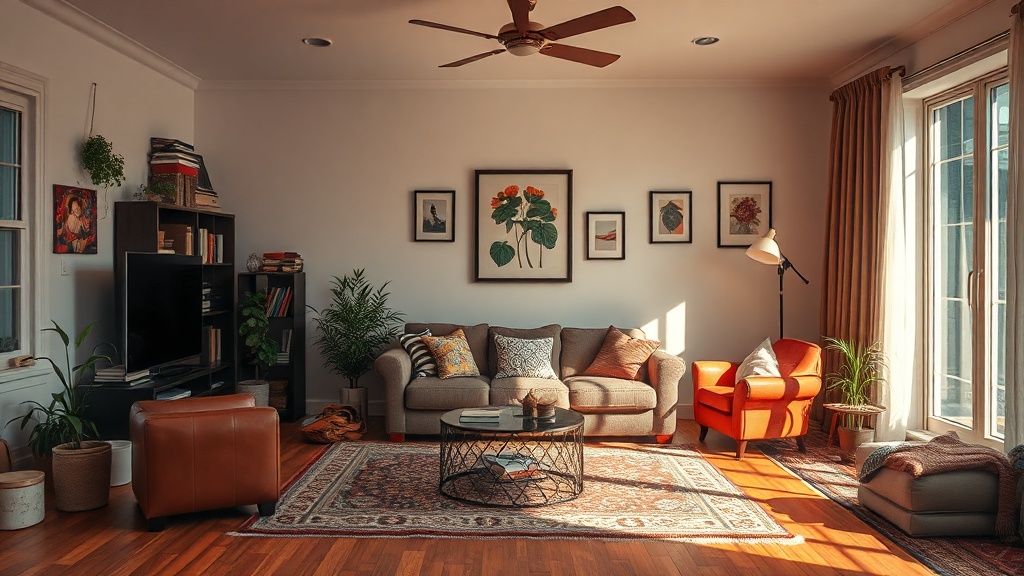
Most people believe that a room feels cluttered because there are too many objects in it. They think that if they just remove one more vase or a stack of books, the room will finally feel "right." This is a mistake. A room can feel cluttered even when it is nearly empty if the proportions are wrong or if the visual weight is unbalanced. It isn't about the number of items; it is about how your eyes move through the room. If every surface demands attention, your brain perceives noise, not peace.
In this guide, we'll look at why your living room might feel restless and how to fix it through intentional layout and material choices. We aren't talking about buying more stuff—we're talking about how you position what you already own.
What Makes a Room Feel Busy?
Visual noise comes from high-contrast patterns and competing focal points. If you have a patterned rug, a textured sofa, and a gallery wall all fighting for your attention, the room becomes exhausting to inhabit. A truly minimal space uses a single point of interest to anchor the room. This could be a large window, a single piece of art, or a fireplace. When you have too many competing anchors, the room feels disjointed.
Consider the concept of visual weight. A dark, heavy velvet sofa has more visual weight than a light-colored linen armchair. If you place all your heavy items on one side of the room, the space will feel lopsided (and your brain will subconsciously try to correct it). To avoid this, you must balance heavy pieces with lighter, more transparent elements like glass coffee tables or open shelving.
How Do I Choose a Color Palette That Doesn't Feel Boring?
The biggest fear with minimalist design is that the room will end up looking like a sterile hospital wing. You don't need bright colors to avoid boredom, but you do need texture. Instead of adding a bright red cushion, try a cream-colored wool throw over a linen sofa. The difference in texture creates depth without adding visual chaos.
A successful palette relies on tonal variations. Instead of picking one shade of beige, look for sand, oatmeal, stone, and taupe. These subtle shifts create a sense of richness. If you want to follow professional standards for color theory, the