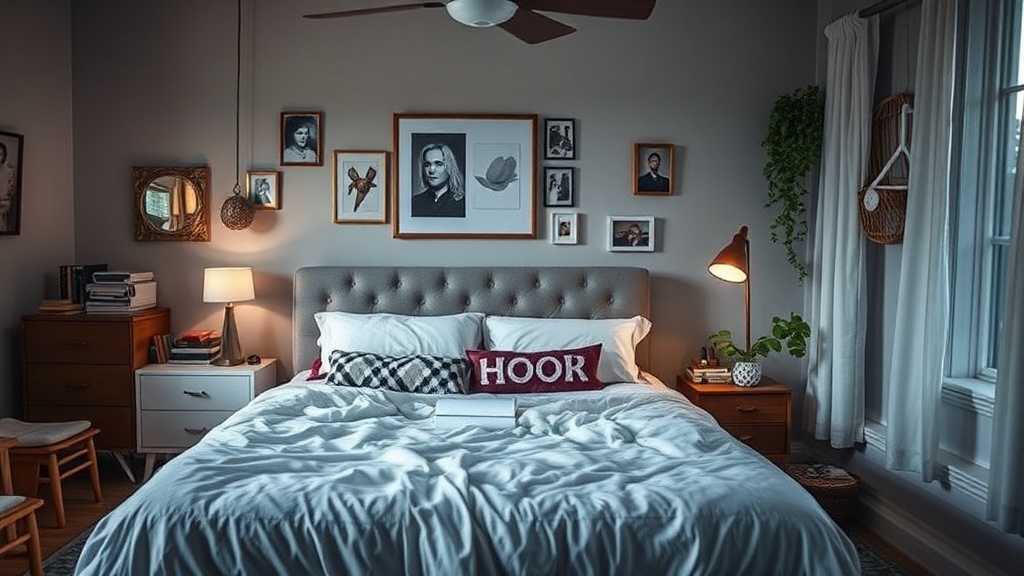
Why Your Bedroom Feels Cluttered Even When It Is Clean

The Invisible Weight of Visual Noise
Studies in environmental psychology suggest that even a single misplaced object can disrupt the brain's ability to enter a state of relaxation. When your bedroom—a space meant for rest—is filled with visual interruptions, your nervous system stays slightly more alert than it should be. This isn't just about physical mess; it is about the cognitive load created by disorganized surfaces and uncoordinated textures. This post explores why your bedroom might feel chaotic despite your cleaning efforts and how to fix it.
Most people think a clean room means a tidy one. They clear the surfaces, but the room still feels "off." The culprit is often visual noise. Visual noise occurs when too many competing elements—different colors, patterns, or textures—fight for your attention. If you have a bright patterned duvet, a textured rug, and three different bedside lamp styles, your eyes never truly rest. You aren't just cleaning; you are managing a sensory experience.
To begin fixing this, look at your surfaces. A nightstand shouldn't be a catch-all for chargers, books, and half-empty water glasses. Even if these items are neatly stacked, they represent "unfinished business" to your brain. A sense of incompletion is a major source of low-level stress. Try to limit your bedside surface to three items: a lamp, a book, and one decorative or functional object. Anything else should live in a drawer.
Does Color Affect Sleep Quality?
The short answer is yes. High-contrast environments keep the brain stimulated. If your walls are a deep navy and your bedding is bright white, that sharp line of contrast acts like a visual alarm clock. For a truly restful space, you want to reduce contrast and increase cohesion. This doesn't mean everything has to be beige (though that is a popular choice for a reason), but rather that the tonal shifts should be subtle.
Think about the light reflecting off your walls. A room with high-gloss paint might bounce light around in a way that feels energetic and busy. Matte finishes tend to absorb light, creating a more grounded, tranquil atmosphere. If you find your bedroom feels too "loud," consider moving toward a monochromatic or tonal color palette. This creates a sense of continuity that allows the eye to glide over the room without stopping at every sharp edge or color change.
You can find excellent color theory inspiration through resources like Architectural Digest, which often highlights how color palettes influence the mood of a room. Instead of choosing colors based on what looks good in a small swatch, consider how they interact with the light at 10:00 PM versus 10:00 AM. A color that looks soft in the morning might look heavy or dark by evening.
How Can I Organize My Closet Without Buying Bins?
The most common mistake in bedroom organization is buying more containers to hide the mess. This often leads to a cycle of "organized clutter," where you own many beautiful boxes that are actually just full of things you don't use. Instead of buying more plastic bins, focus on the concept of curation. If you can't see it, you won't wear it—but if you see too much, you feel overwhelmed.
Try these three methods to manage your belongings without adding more stuff to the room:
- The Hanger Trick: Turn all your hangers backward. When you wear an item, turn the hanger the right way. After six months, see which hangers are still backward. Those are the items you don't actually need.
- Vertical Space: Instead of adding more furniture, look at your walls. A simple shelf can hold your most used items without taking up floor space or adding visual weight.
- The One-In, One-Out Rule: For every new item of clothing or decor that enters the room, one must leave. This keeps the volume of your belongings stable.
If you are looking for high-quality storage solutions that focus on durability and style rather than temporary plastic, IKEA provides many modular options that can be integrated into your decor rather than just acting as a hiding spot for clutter.
Is Too Much Furniture Making My Room Feel Small?
A room can feel cramped even if there is plenty of floor space. This usually happens because of the scale and placement of furniture. If you have several pieces of furniture with heavy, dark silhouettes, they will dominate the room and make it feel "closed in." A single large, heavy dresser can feel much more imposing than three smaller, lighter pieces, even if the total square footage is the same.
To create more breathing room, look for furniture with legs. Furniture that sits directly on the floor (like a heavy plinth bed or a solid-base nightstand) creates a visual block. Furniture with tapered legs or a "floating" appearance allows light and air to flow underneath, making the floor plane look larger. This is a classic interior design trick to make small rooms feel much more expansive.
| Furniture Type | Visual Impact | Best For |
|---|---|---|
| Solid Base | Grounding, heavy, permanent | Large, high-ceilinged rooms |
| Tapered Legs | Light, airy, modern | Small to medium bedrooms |
| Wall-Mounted | Minimalist, space-saving | Extremely tight spaces |
Lastly, consider the "path of movement." If you have to sidestep a chair or a small table to get to your bed, the room will feel cluttered. A clear path of movement signals to the brain that the space is functional and easy to inhabit. If you find yourself constantly bumping into things, it is time to rethink your layout. A room should serve you, not the other way around.