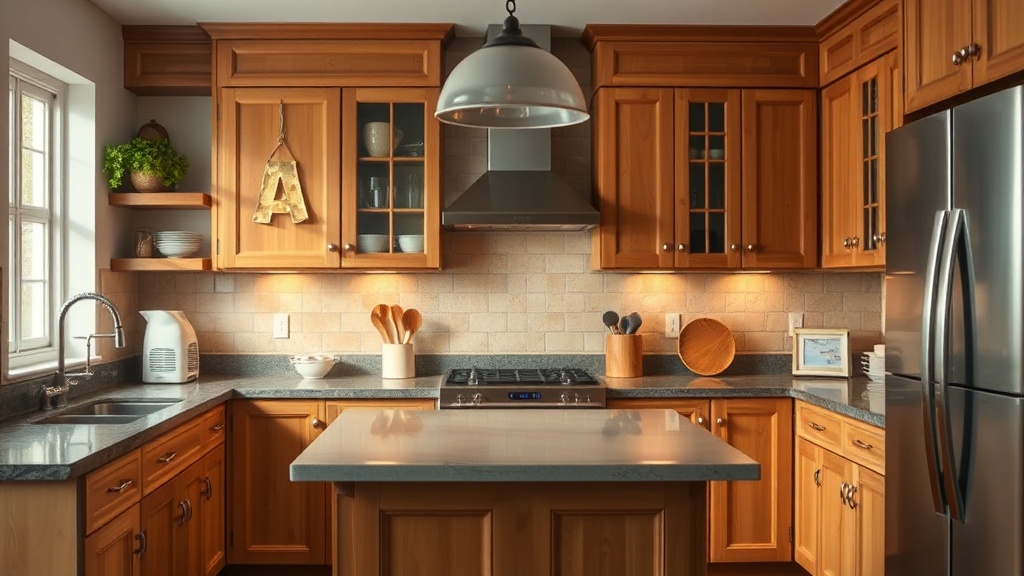
Why Do My Kitchen Cabinets Look Dated and How Can I Fix Them?

Why do kitchen cabinets feel old even when they aren't?
Have you ever stood in your kitchen and felt a sudden sense of frustration with the cabinetry? It might not even be that the cabinets are broken or falling apart. Often, the issue lies in the visual weight, the hardware, or the way the finish interacts with your current lighting. A kitchen can feel dated simply because the aesthetic hasn't kept up with the natural evolution of your home. This post covers practical ways to refresh your cabinetry—ranging from small hardware changes to more significant surface updates—without needing a full kitchen remodel.
The kitchen is the heart of the home, but it's also the room where design decisions often feel the most permanent. When cabinets look "off," it usually comes down to three things: the color (is it too heavy or too bright?), the hardware (is it outdated or poorly scaled?), and the hardware style (is it too ornate or too plain?). You don't need to tear out the boxes to change the vibe of the entire room.
Can I paint my kitchen cabinets myself?
Painting is the most common way to refresh a kitchen, but it's also the easiest way to ruin a room if you skip the prep work. If you're looking at a sea of honey-oak or dark espresso and feeling the itch to change it, you need to understand that the surface preparation is more important than the actual painting. A quick coat of paint over old varnish will just peel within months—and that looks much worse than the original dated color.
Before you grab a brush, you must degrease. Kitchen cabinets collect a film of oil and steam that is invisible to the eye but devastating to paint adhesion. Use a heavy-duty cleaner to strip the grime away. Once dry, a light sanding is required to create "tooth" for the new paint to grip. If you want professional results, look into high-quality cabinet enamels. These are specifically formulated to be harder and more durable than standard wall paint. For technical guidance on the best types of finishes, checking resources like Bob Vila can provide great technical specs on paint durability.
- Step 1: Remove all doors and hardware.
- Step 2: Clean with a degreaser (TSP is a classic choice).
- Step 3: Sand with a fine-grit sandpaper.
- Step 4: Apply a primer designed for slick surfaces.
- Step 5: Apply two thin coats of enamel paint.
If you aren't ready for the commitment of paint, consider the impact of the doors themselves. Shaker-style doors are timeless, but raised panel doors—which were popular in the 90s and early 2000s—can make a kitchen feel heavy. While you can't change the door shape without replacing the cabinet, you can change how the eye perceives the texture.
How do I choose modern cabinet hardware?
Hardware is the jewelry of your kitchen. It's a small detail, but it carries a lot of weight. If your cabinets are a solid, neutral color, your hardware becomes a focal point. If you have dated brass pulls or bulky, heavy handles, your kitchen will feel stuck in a specific decade. A simple swap can change the entire mood of the room.
For a modern, minimalist look, look for slim, matte black or brushed nickel pulls. If you want something more classic, consider a polished chrome or a sleek, thin bar handle. The key is to ensure the scale matches the cabinet size. A tiny knob on a large drawer looks accidental; a massive pull on a small cabinet looks heavy. A good rule of thumb is to measure your drawer width and choose hardware that is roughly one-third of that width to maintain visual balance.
Don't overlook the way hardware interacts with your countertop. If you have a busy, patterned granite, a simple, solid-colored hardware piece will keep the kitchen from feeling too busy. If you have a clean, white quartz, you can afford to be a bit more experimental with textures or colors. You can find endless inspiration for hardware styles on sites like Architectural Digest to see what is currently trending in high-end design.
What are the best ways to update a kitchen without a remodel?
Sometimes, the problem isn't the cabinets at all—it's the surrounding elements that make them look bad. Sometimes the cabinets are fine, but the lighting is casting harsh shadows that make the wood look yellow or dingy. This is where layering becomes important. If you only have one large overhead light, your kitchen will always feel flat.
Consider adding under-cabinet lighting. This is a relatively easy DIY task that can be done with battery-operated or plug-in LED strips. It adds depth and makes the countertop surface feel more functional and high-end. It also draws the eye away from the cabinet doors and toward the work surface, which can make an older kitchen feel much more modern. It's a small change that makes a massive difference in how the room functions at night.
Another way to change the look of your cabinets is through the "open shelving" approach. If you have upper cabinets that feel heavy or bulky, try removing the doors from one or two sections. This breaks up the visual mass and allows the room to breathe. It's a great way to showcase curated ceramics or glassware, turning a storage area into a design feature. Just be warned—this requires you to keep the inside of those cabinets much cleaner than usual.
Finally, think about the backsplash. The relationship between the top of your cabinet and the backsplash is a critical design junction. If your backsplash is dated, it will make even brand-new cabinets look old. A simple subway tile or a clean, textured backsplash can bridge the gap between an older cabinet and a modern aesthetic. It's all about the transitions and how one surface meets the next.