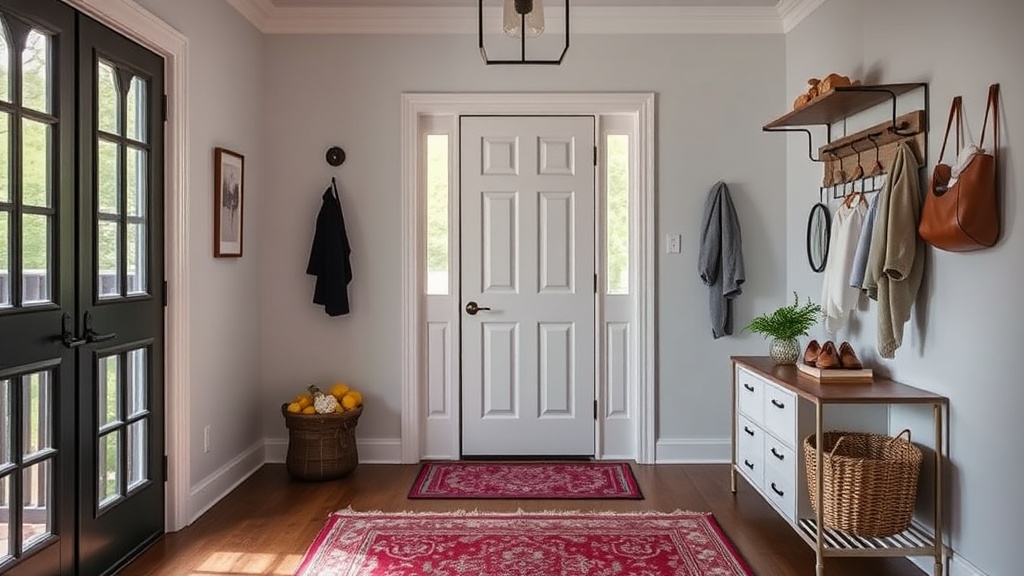
How to Design a Minimalist Entryway That Stays Organized

The entryway sets the tone for the entire home. It's also the first place clutter accumulates—keys, mail, shoes, bags. This guide covers practical strategies for designing a minimalist entryway that looks clean and functions without daily effort. You'll learn storage solutions that hide the mess, furniture choices that maximize small spaces, and habits that keep everything in place.
What Furniture Works Best in a Small Entryway?
A narrow console table or floating shelf beats a bulky cabinet every time. The goal is surface area without visual weight. Look for pieces with legs—preferably hairpin or tapered—to keep sightlines open underneath.
The CB2 Helix 70" Acacia Console (around $499) works well in tighter spots. Its slim profile—just 12 inches deep—fits behind most doors. The open lower shelf holds baskets for hidden storage. That said, cheaper options exist. The IKEA LACK wall shelf ($24.99) mounted at hip height creates the same effect for a fraction of the cost.
For seating, skip the bench unless the space is genuinely wide. A single Muuto Fiber Side Chair (in off-white or grey) tucks neatly against a wall. It's there when needed for shoe-tying, invisible when not. The catch? It offers zero storage. If shoes pile up regardless, the West Elm Mid-Century Shoe Rack ($299) holds six pairs and doubles as seating. Worth noting: the cushion is sold separately.
Floating furniture—wall-mounted coat hooks, shelves, even small desks—keeps floors clear. This matters more than most people realize. Seeing floor space triggers a psychological sense of roominess. A Wall Control metal pegboard ($54) mounted near the door handles bags, keys, and dog leashes without consuming an inch of floor real estate.
How Do You Hide Clutter in a Minimalist Entryway?
Closed storage beats open storage for maintaining a minimalist look. Baskets, bins with lids, and cabinets with doors hide visual noise.
The Target Brightroom lidded bins ($15-$22) slide under benches or stack on shelves. They come in neutral tones—white, grey, tan—that disappear into most color schemes. For a splurge, HAY's Colour Crates with lids ($35-$55) do the same job with Danish design credentials.
Mail is the enemy of entryways. The solution isn't better organizing—it's faster processing. Install a small wall-mounted file holder (the Umbra Estique Organizer, $20) for items needing action. Everything else gets recycled immediately. No "sort later" piles. Here's the thing: later never comes.
Keys demand a designated spot. A simple Command hook works. So does a small ceramic dish. The method matters less than consistency. Pick one. Use it. Every time.
For shoes, the math is simple: storage capacity must match actual habits, not aspirational ones. A family of four owning twenty pairs of shoes needs twenty slots—not a cute four-pair rack that guarantees overflow. The Yamazaki Home Tower Shoe Rack ($65) expands horizontally as needed. It's steel, not wood, so it feels lighter visually.
"The most organized entryways don't contain less stuff—they contain stuff in the right containers." — Apartment Therapy
Which Colors and Materials Create a Calm Entryway?
Light, warm neutrals work best. Think oatmeal, warm grey, soft white—not stark hospital white, which shows every scuff. The entryway receives more abuse than any room. Practicality matters.
Paint sheen is an often-missed detail. Eggshell or satin wipes clean. Flat paint looks richer but marks permanently. Benjamin Moore's Chantilly Lace (a true white with no undertones) in satin finish handles muddy handprints better than competitors. For something warmer, Farrow & Ball's School House White has enough yellow to feel welcoming without going beige.
Wood tones should stay consistent—or deliberately contrasted. Mixed woods look accidental. Choose either all light (oak, maple, birch) or all dark (walnut, mahogany, black-stained). The Article Sven Bench in charme tan leather with walnut legs pairs well with walnut coat hooks and oak flooring. Mismatch it with pine shelves and the look fractures.
Metal finishes need the same discipline. Brushed brass throughout. Or matte black. Or chrome. Not all three. A Schoolhouse Electric dipped sconce in matte black ($199) coordinates with black hardware on a white cabinet. Simple. Intentional.
Plants help—but choose tough ones. Entryways get drafty and receive inconsistent light. A ZZ plant or snake plant survives neglect. Place one in a simple terracotta pot (unpainted, the $4 hardware store variety) on the console. That's it. One plant, not a jungle.
What Daily Habits Keep an Entryway Organized?
Systems fail without maintenance. The best-designed minimalist entryway requires two minutes daily and a weekly reset.
The two-minute rule: before bed, surface areas get cleared. Mail sorted, keys hung, shoes in their spots. Not organized—just off surfaces. Visible clutter attracts more clutter. It's a magnetic phenomenon psychologists call "broken windows theory" applied to interiors.
The weekly reset (Sunday evening, typically) goes deeper. Shoes get wiped. The console gets dusted. Out-of-season items migrate to closets. Bags get emptied of receipts and wrappers that somehow accumulated. This isn't deep cleaning—it's prevention.
Here's the thing about habits: they work better with environmental cues. A small tray visually screams "keys go here." An empty hook beside the door asks for tomorrow's bag. Design the space to guide behavior. The Wirecutter guide to entryway organization emphasizes this point—storage that requires extra steps fails. The hook at eye level gets used. The hook behind the door gets ignored.
Quick Reference: Entryway Essentials Checklist
| Item | Budget Option | Investment Option | Purpose |
|---|---|---|---|
| Console/Surface | IKEA LACK shelf ($25) | CB2 Helix Console ($499) | Drop zone for keys, mail |
| Seating | Muuto Fiber Side Chair ($195) | West Elm Shoe Rack Bench ($299) | Shoe tying, brief rest |
| Shoe Storage | Yamazaki Tower ($65) | Custom built-in (varies) | Contain footwear overflow |
| Key Storage | Command hook ($3) | Schoolhouse ceramic tray ($28) | Consistent key placement |
| Mail Handling | Umbra wall organizer ($20) | Built-in mail slot (varies) | Prevent paper pileup |
| Lighting | Plug-in sconce ($40) | Hardwired Schoolhouse sconce ($199) | Safety, ambiance |
The table above isn't prescriptive—it's illustrative. Mix price points based on priorities. Splurge on the item used most (usually seating). Save on decorative elements.
How Much Does a Minimalist Entryway Makeover Cost?
Anywhere from $150 to $2,500 depending on scope and patience. The budget breakdown usually splits three ways: paint ($50-100), furniture ($100-800), and storage accessories ($50-400). Labor—if hiring painters or carpenters—multiplies everything.
DIY paint jobs save money but require proper prep. Entryways have trim, doors, and often intricate molding. Taping takes longer than painting. Worth noting: Bob Vila's room painting guide suggests budgeting a full weekend for a quality entryway job, not an afternoon.
Furniture costs vary by source. Facebook Marketplace and estate sales in Fredericton (and similar mid-size cities) regularly turn up solid wood consoles for under $100. Refinishing a $40 thrifted piece with Minwax Weathered Oak stain ($12) often yields better results than buying new particleboard. The catch? Time. And transport. And the occasional wobbly leg requiring shims.
For renters, focus on portable solutions. Over-the-door organizers. Freestanding coat racks (the Umbra Sticks Rack, $40, leans against walls—no mounting required). Adhesive hooks that remove cleanly. These follow you to the next place. Architectural Digest's small entryway ideas include several renter-friendly options worth reviewing.
The most expensive mistake? Buying "someday" furniture. The bench that's too big for the current apartment but might fit the next house. The oversized mirror purchased on sale with no specific wall in mind. Minimalist design requires ruthless specificity. Measure first. Buy second. The right piece at the right size beats the perfect piece at the wrong size every time.
A well-designed entryway doesn't just look good—it functions as a daily decompression chamber. Crossing the threshold becomes a transition. The outside world stays outside. The inside remains calm. That's worth more than any console table price tag suggests.
Steps
- 1
Declutter and assess your space
- 2
Choose multifunctional furniture
- 3
Establish a simple maintenance routine