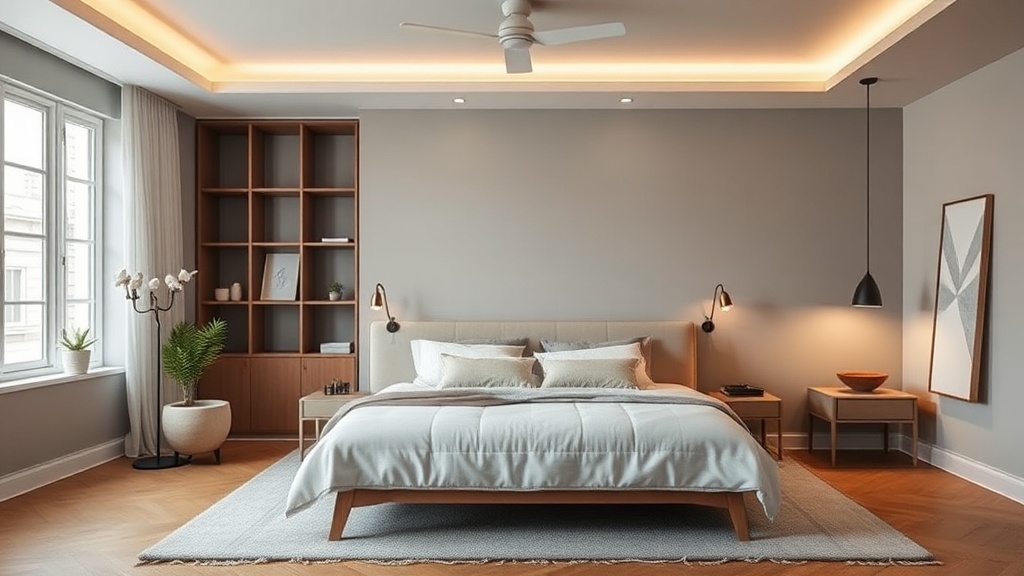
How to Create a Serene Minimalist Bedroom Retreat in 5 Steps

What Makes a Bedroom Feel Minimalist and Calm?
A minimalist bedroom strips away visual noise, limits furniture to what's genuinely necessary, and creates a sanctuary where rest comes easily. This guide walks through five concrete steps to transform any bedroom into a serene retreat—no design degree required. You'll learn how to declutter without going extreme, choose colors that actually promote sleep, and invest in pieces that last. Here's the thing: minimalism isn't about owning nothing. It's about owning the right things and arranging them thoughtfully.
How Do You Start Decluttering a Bedroom Without Getting Overwhelmed?
Start with surfaces. Clear nightstands, dressers, and floors before tackling closets or under-bed storage.
The bedroom accumulates clutter faster than any other room. Books migrate to nightstands. Clothes pile on chairs. Phone chargers snake across every surface. That said, you don't need to empty the room in one weekend. A systematic approach works better than a marathon purge.
Begin with the visible surfaces. These have the biggest impact on how calm (or chaotic) the space feels. Remove everything from nightstands except a lamp, perhaps a small clock, and one personal item. Put the rest in a box—don't sort it yet. The goal is immediate visual relief.
Next, address the floor. Shoes, laundry baskets, exercise equipment—find homes for these elsewhere or donate what isn't used weekly. Worth noting: if something belongs in another room, move it there immediately. Don't create "to relocate later" piles.
For closet decluttering, try the reverse hanger trick: turn all hangers backward. After wearing something, hang it properly. In three months, donate anything still facing backward. This method removes decision fatigue—you'll see actual usage patterns instead of guessing what you might wear someday.
What Stays and What Goes
| Keep | Remove | Relocate |
|---|---|---|
| Daily-worn clothing | Unworn items (1+ years) | Off-season storage (elsewhere) |
| One decorative item per surface | Expired magazines/catalogs | Work documents (office) |
| Quality bedding (2-3 sets max) | Pillows without support | Exercise gear (gym area) |
| Functional lighting | Broken electronics | Seasonal decor (storage) |
| One meaningful artwork | Excessive throw pillows | Books (living room/library) |
That second round of sorting—the box from your nightstand—happens after you've lived with clear surfaces for a week. You'll be surprised how little you retrieve.
What Colors Work Best for a Minimalist Bedroom?
Stick to a base of whites, warm grays, soft taupes, or muted earth tones with one accent color at most.
Color psychology isn't marketing fluff—research from The Sleep Foundation confirms that muted blues, greens, and neutrals lower heart rate and blood pressure, helping you fall asleep faster. Bright reds and oranges? They do the opposite.
But here's where personal preference matters more than rules. If beige bores you, don't force it. The catch? Restraint. Pick one palette and commit.
For walls, consider Farrow & Ball's "Shadow White" or Benjamin Moore's "Classic Gray"—both read as sophisticated neutrals without the coldness of pure white. If you're renting and can't paint, removable wallpaper in a subtle texture (think grasscloth or linen-look) adds warmth without pattern overload.
Bedding should blend with walls for a seamless look. The Brooklinen Luxe Core Sheet Set in "Smoke" or "Cream" offers that hotel-suite cohesion. Layer with one textured throw in oatmeal or sand. Not three throws. One.
Wood tones add necessary warmth to prevent the "hospital room" effect. Light oak, walnut, or black-stained ash all work—just keep all wood furniture in the same tone family. Mixed woods create visual fragmentation that fights the calm you're building.
What Furniture Do You Actually Need in a Minimalist Bedroom?
A bed, one nightstand per sleeper, and a single dresser or wardrobe—nothing else is mandatory.
Minimalist bedrooms get derailed by furniture bloat. Bench at the foot of the bed? Rarely used. Second nightstand for a single sleeper? Just a clutter magnet. Oversized armoire in a room with a closet? Redundant.
The bed is your anchor. Platform beds work particularly well for minimalism—they eliminate the need for a box spring and often include storage underneath. The Article Taiga Smoke Queen Bed has clean lines, a neutral gray upholstery that hides wear, and a low profile that makes ceilings feel higher.
Nightstands should do real work. Drawers hide the inevitable small items (lip balm, hand cream, that book you're actually reading). The West Elm Mid-Century Nightstand offers one drawer and an open shelf—enough storage without bulk. Measure carefully: you want 3-4 inches of clearance between stand and mattress edge for easy bed-making.
If your closet holds everything, skip the dresser entirely. If you need one, choose low and wide over tall and narrow. Horizontal lines calm; vertical lines energize. The IKEA MALM 6-drawer dresser is ubiquitous for good reason—understated, functional, and at 63 inches wide, it grounds the room without dominating it.
Multi-Function Pieces Worth Considering
- Storage bed: The Thuma Bed Frame has a built-in ledge for books and a removable headboard—clean design with hidden utility.
- Floating wall shelves: Replace nightstands entirely in tiny rooms. The CB2 Ledge Wall Shelves hold exactly what you need and free floor space.
- Room divider with storage: In studio apartments, the Floyd Shelving System separates sleeping and living areas while holding books or plants.
How Do You Light a Bedroom for Relaxation?
Use layers: dimmable overhead lighting, bedside lamps at eye level when seated, and blackout window treatments.
Lighting transforms a room more than furniture ever will. Harsh overhead fixtures trigger alertness. Warm, layered light signals your brain to wind down. That said, most bedrooms get this completely backward.
Start with window coverings. Blackout isn't optional if you value sleep quality. The Honeycomb Blackout Shades from The Shade Store block light completely while providing insulation—relevant for bedrooms facing east or west. Layer with linen curtains in a tone slightly lighter than your walls for softness during daylight hours.
For artificial light, the goal is control. Install a dimmer switch for any overhead fixture (an electrician can do this in under an hour). At full brightness, clean the room. At 20%, prepare for sleep.
Bedside lighting should sit at or below eye level when you're sitting up in bed. This prevents glare and creates flattering, intimate light. The Menu JWDA Table Lamp has a dimmer built into its brass base—one touch adjusts from reading light to nightlight. Pair with a warm LED bulb (2700K color temperature, not the standard 3000K).
Avoid blue light entirely in the hour before sleep. That means no phone scrolling, yes, but also check your bulbs. The Philips Hue White Ambiance bulbs shift from energizing daylight to warm candlelight automatically—worth the investment if you're serious about sleep hygiene.
How Do You Add Warmth Without Adding Clutter?
Focus on texture, not quantity—one excellent rug, natural materials, and living plants beat dozens of small accessories.
The biggest minimalist bedroom mistake? Creating a sterile box. White walls, white bedding, nothing personal—this feels like a hotel you can't wait to leave. The fix is texture and life, curated carefully.
A large area rug anchors the bed and warms bare floors. The Armadillo & Co. Classic Collection in "Braid" offers undyed wool in natural oatmeal tones—soft underfoot, sustainably made, and substantial enough to handle a king bed plus nightstands. Size matters: choose at least 8x10 feet so the rug extends 18-24 inches beyond the bed on all sides.
Plants do what no object can. They add color without committing to a color scheme, improve air quality, and require just enough care to create routine without burden. The Snake Plant and ZZ Plant tolerate low light and irregular watering—perfect for bedrooms. One substantial plant beats five small ones scattered around.
Artwork should be intentional. One large piece over the bed or a small gallery of three related prints—never both. The Minimalist Print collection on Artsy features works on paper that won't overwhelm serene spaces. Frame simply: natural wood or thin black metal.
Finally, scent. A minimalist bedroom engages all senses. The P.F. Candle Co. Teakwood & Tobacco soy candle offers warmth without sweetness. Burn for an hour before sleep, then extinguish. Or skip the flame entirely and use a Vitruvi Stone Diffuser with lavender or cedarwood key oil.
You've cleared the clutter, chosen colors that soothe, invested in furniture that earns its space, layered light thoughtfully, and added texture without chaos. The result isn't a showroom—it's a room that works for actual rest. Sleep well.
Steps
- 1
Declutter surfaces and remove non-essential items
- 2
Choose a calming neutral color palette
- 3
Select functional furniture with clean lines