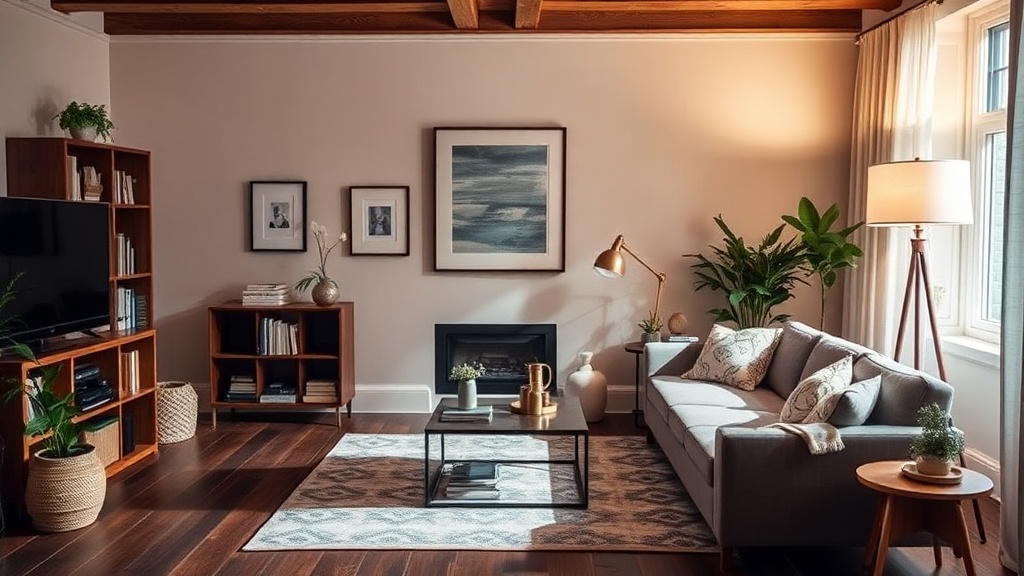
How to Create a Calm, Clutter-Free Living Room on a Budget

This post covers practical, budget-friendly strategies for transforming a chaotic living room into a calm, clutter-free space that actually feels good to spend time in. You'll learn how to ruthlessly edit belongings, arrange furniture for better flow, choose paint colors that soothe the eye, and make smart purchases without draining the bank account. A serene living room isn't reserved for glossy design magazines or people with unlimited budgets—it's achievable with clear intention, a bit of elbow grease, and a few well-placed changes that make the whole room feel like a deep exhale at the end of a long day.
What is the easiest way to declutter a living room on a budget?
The easiest way is to remove everything that doesn't serve a daily purpose or bring genuine comfort, starting with the flat surfaces that collect the most visual noise. Grab a simple trash bag and a cardboard box. Walk through the room systematically—left to right—and pick up anything broken, expired, duplicated, or unwanted. You'll be surprised how much calmer the space feels after just twenty minutes of honest editing.
Here's the thing: decluttering costs absolutely nothing but time, and it's the single most effective step you can take before buying a single storage bin or decorative basket. Set a timer for fifteen minutes each evening and focus on one surface only—the coffee table, the sideboard, the mantel, or that one chair that always collects jackets and unread mail. Small wins build momentum faster than attempting to overhaul the entire room in one exhausting afternoon (unless you genuinely thrive on chaos and have pizza on standby).
Sort items into four distinct piles: keep, donate, sell, and relocate. That magazine stack from last March? Recycle it without guilt. The throw pillow with the frayed seam that's been bothering you for months? Toss it. The decorative bowl you received as a gift but never liked? Donate it. The catch? Everything you decide to keep needs a designated home that makes sense. If an item doesn't have one, it isn't staying in the room.
For storage that won't blow the budget, the IKEA KALLAX shelving unit remains an unbeatable workhorse in minimalist spaces. Pair it with woven baskets from Target's Threshold line to hide cables, remotes, board games, and charging cords. Vertical storage frees up precious floor space and keeps the eye moving upward, which naturally makes the room feel larger and more open.
How do you make a small living room look calm and spacious?
You create visual breathing room by pulling furniture away from the walls and limiting the number of large pieces to only what the space can comfortably hold. It sounds counterintuitive, especially in a small room, but floating a sofa even six inches from the wall creates depth, casts soft shadows, and improves traffic flow in ways that pushing everything against the perimeter simply cannot achieve.
Choose furniture with exposed legs whenever possible. A mid-century piece from West Elm or a simple, well-proportioned sofa from Article allows light to pass underneath, which tricks the eye into seeing more continuous floor. Heavy, skirted pieces that sit flush to the ground visually swallow space and make the room feel closed in and heavier than it needs to be.
Strategic mirrors amplify whatever natural light you've got, which is one of the cheapest ways to expand a room visually. Hang one opposite a window if the layout allows. The West Elm Metal Framed Mirror bounces daylight beautifully without cluttering the wall with ornate detail. Keep wall art minimal and intentional. One large canvas or a single framed textile reads far calmer than a busy gallery wall of twelve mismatched frames fighting for attention.
Rugs matter more than most people realize, especially in open-concept homes where the living room needs to feel like its own defined zone. A rug that's too small breaks the room into visual fragments and makes everything feel cramped and temporary, like the furniture is floating in space. Size up. The front legs of your sofa and both front legs of your accent chairs should sit firmly on the rug. For budget-friendly options that don't look cheap, check Target's Project 62 collection or wait for a sale at Rugs USA, where 8x10 options often drop below two hundred dollars and ship for free.
| Strategy | Estimated Cost | Visual Impact |
|---|---|---|
| Floating furniture away from walls | Free | High |
| Adding a large mirror | $50–$150 | High |
| Swapping to exposed-leg furniture | $300–$800 | Medium |
| Correct rug sizing | $100–$300 | High |
| Reducing and simplifying wall art | Free | Medium |
What colors make a living room feel more peaceful?
Soft, muted neutrals—warm whites, greige, sage green, and dusty blue—create the most peaceful backdrop for a living room because they reflect light rather than absorb it. These tones help the room feel open, restful, and quietly pulled together without demanding attention.
That said, you don't need to repaint every wall to see a difference. If a full room makeover isn't in the budget this month, start with the biggest surface: the walls. Behr's "Swiss Coffee" or Farrow & Ball's "Skimming Stone" are popular choices for a reason—they shift gently with the natural light throughout the day, reading warm in the morning and softly moody in the evening. Both pair well with natural wood and white trim.
Keep the overall color palette tight and disciplined. Three colors maximum—one dominant, one secondary, and one subtle accent. A cream sofa, oatmeal linen curtains, and charcoal cotton throw pillows read as intentional and expensive. Throw in navy, rust, mustard, and emerald green all at once and the room starts to vibrate with visual competition, which is the opposite of calm.
Natural materials soften the look of any palette without introducing competing colors. A jute or sisal rug, a raw wood side table, or a simple linen curtain adds warmth and texture through material rather than hue. Worth noting: plants function as neutrals in this context. A single fiddle-leaf fig in a corner, a trailing pothos on a shelf, or a low-maintenance snake plant on the windowsill brings organic life into the room without adding visual clutter.
Where should you spend money when decorating a minimalist living room?
Invest the bulk of the budget in the sofa and the lighting, because these two elements anchor the room and get used every single day. Everything else—side tables, decorative objects, textiles, and artwork—can be sourced secondhand, discounted, or DIY'd without sacrificing the overall look.
The sofa is the largest piece of furniture in most living rooms and the one that sees the most daily use from family, guests, and pets. A cheap frame with low-density foam sags within months and makes the whole room look tired and neglected, no matter how nice the throw pillows are. Look for solid hardwood construction, high-density foam cushions, and fabric with a decent double-rub count that can withstand real life. The Article Sven sofa offers clean lines, full-grain leather or durable fabric options, and a mid-range price point that balances quality with accessibility. If that's still too steep, check Facebook Marketplace, Kijiji, or local estate sales around Fredericton—solid mid-century pieces turn up regularly and often just need a good cleaning and a fresh set of legs.
Lighting sets the mood more dramatically than paint color. A room with only overhead fixtures creates harsh shadows and a clinical, unwelcoming feel. Layer in a floor lamp for ambient glow, a table lamp for task lighting, and maybe a wall sconce for accent. The IKEA HEKTAR floor lamp casts a warm, directional glow that's perfect for reading corners without taking up much visual space. Dimmer switches cost under twenty dollars at most hardware stores and completely change how a room feels after sunset.
Save money on accessories, artwork, and side tables. Thrift stores and garage sales are full of ceramic vases, solid wood end tables, and vintage frames waiting for a coat of paint. A five-dollar can of Rust-Oleum in matte black or warm white can transform a dated piece into something that looks deliberate and current. Frame a simple page from an old book or a free botanical print downloaded online.
How do you maintain a clutter-free living room long-term?
You maintain a clutter-free living room by building small habits that prevent mess from accumulating in the first place, rather than relying on occasional marathon cleaning sessions. The one-touch rule works wonders here: when you pick something up—a mug, a remote, a pair of shoes—put it where it belongs immediately instead of setting it down on the nearest flat surface.
Create a simple daily reset ritual. Ten minutes before bed, fluff the sofa pillows, fold the throw blankets, straighten the coffee table books, and clear any surfaces. It isn't deep cleaning—it's resetting the stage. Doing this consistently every evening means you never face a dreaded weekend marathon of tidying, and the room greets you each morning with a sense of order.
Be ruthless about what enters the room in the first place. Every new decorative object, coffee table book, candle, or gadget needs to earn its place through function or genuine joy. The catch? If you buy something new, strongly consider removing something old. This one-in, one-out rule keeps the total volume of stuff steady and forces thoughtful decisions about what deserves the limited real estate.
Storage solutions should be obvious and frictionless, not hidden behind complicated folding techniques or hard-to-reach shelves. Lidded baskets hide a multitude of sins and keep the room looking tidy even when life gets busy and the last thing you want to do is organize. A storage ottoman from HomeGoods can house extra throw blankets, board games, and magazines while doubling as a coffee table or extra seating when friends come over. If putting something away takes more than five seconds, the system is too complicated and needs to be simplified before it collapses under neglect.
Finally, remember that minimalism in the living room isn't about creating a cold, empty showroom. It's about making intentional room for conversation, rest, afternoon naps, and quiet moments with a book. The budget-friendly part simply proves that clarity and calm matter more than expensive furniture or perfect styling.