Are You Using the Wrong Size Rug in Every Room?

Most rooms look off—not because of the furniture or wall color—but because the rug is the wrong size or positioned incorrectly. This guide breaks down exactly how to choose and place rugs in your living room, bedroom, dining area, and entryway so your space feels grounded, proportional, and intentional. You'll learn the specific measurements that work, common mistakes to skip, and how to fix what you already own.
Why Does Rug Size Matter So Much?
A rug anchors your furniture and defines zones within open spaces. When it's too small, your furniture looks like it's floating—unconnected and visually unstable. When it's too large, it can overwhelm the room and make the space feel cramped. The right rug creates a visual foundation that pulls everything together.
Most people buy rugs that are too small. It's an expensive mistake because an undersized rug makes a room feel smaller than it actually is. Your eye reads the rug as the boundary of the seating area, so when the rug stops short, the whole arrangement feels compressed. A properly sized rug extends far enough under furniture that the pieces feel connected to a cohesive ground plane.
Beyond aesthetics, size affects function. In dining rooms, chairs need to slide out without catching on the rug's edge. In bedrooms, you want soft landings when you step out of bed. Getting the dimensions right means your rug works practically while looking pulled-together.
How Big Should Your Living Room Rug Be?
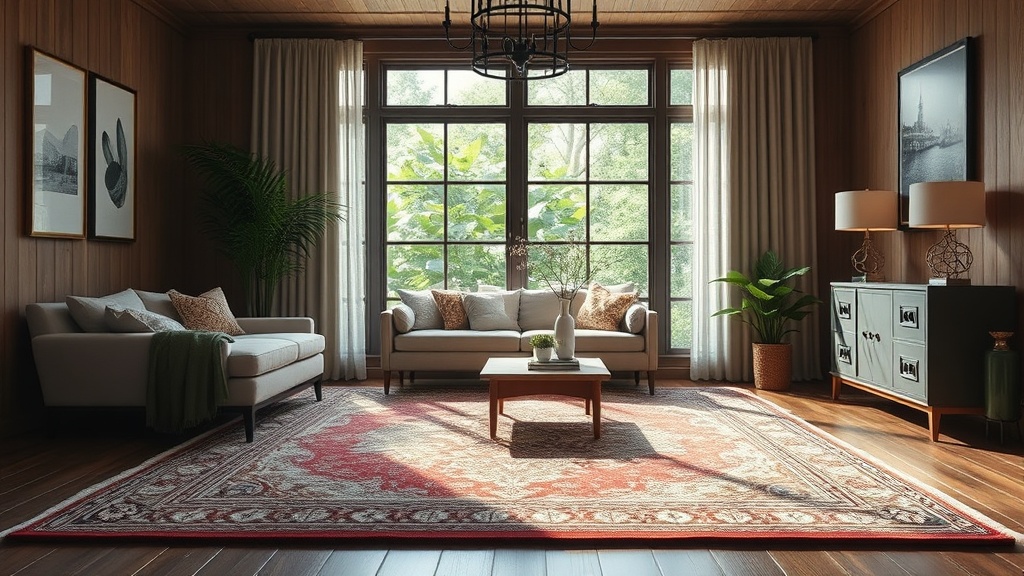
The living room is where most rug mistakes happen. The standard advice—front legs on, back legs off—is actually a compromise for rugs that are slightly too small. The better approach depends on your layout.
For most sofas and standard seating arrangements, aim for an 8'x10' or 9'x12' rug. All furniture legs should sit on the rug if your space allows. This creates a unified conversation area where pieces feel intentionally grouped. If your budget or room dimensions won't stretch that far, at minimum get the front legs of all major pieces onto the rug. Anything smaller than 6'x9' in a standard living room usually looks like a misplaced doormat.
Leave 12-18 inches of bare floor between the rug edge and your walls. This creates a visual frame that prevents the room from feeling carpeted wall-to-wall. In smaller rooms, 8 inches of exposed floor can work—but less than that and the proportions start to feel wrong.
If you're working with a sectional, the rug should extend at least 6 inches past each side of the seating. For L-shaped sectionals, this often means going up to a 9'x12' or 10'x14' size. The key is that the rug should contain the main seating area completely—not just the coffee table in the center.
What Size Rug Works Best Under a Dining Table?
Dining room sizing is more straightforward because it follows a simple rule: the rug needs to extend at least 24 inches beyond the table edges on all sides. This gives chairs enough room to slide out without their back legs catching on the rug.
Measure your table first, then add 48 inches to both dimensions. A standard 72'x36' dining table needs a rug that's at least 9'x8'—which usually means buying a 9'x12' since that's a common standard size. Round tables follow the same logic: measure the diameter and add 48 inches.
Don't be tempted to go smaller. When chairs sit half-on, half-off the rug, they wobble and the rug bunches. It's frustrating every single time someone sits down or stands up. Plus, the visual effect of a too-small dining rug is especially obvious because the table creates such a strong focal point—you can clearly see when the rug boundary doesn't align with the functional needs of the space.
How Do You Choose the Right Rug Size for a Bedroom?
Bedroom rug placement depends on your bed size and room dimensions. You have three main options, ranked from most to least expensive.
Option one: a large rug that extends at least 18-24 inches past all sides of the bed. For a queen bed, that's typically an 8'x10'. For a king, you'll want 9'x12'. This gives you soft footing when you swing your legs out of bed in the morning and creates a luxurious, hotel-like feel. The rug should sit under the entire bed frame but stop before reaching any side tables—those should stay on the bare floor.
Option two: runners flanking each side of the bed. This works when you have a large room but don't want to cover the floor completely, or when you already have wall-to-wall carpeting and just want to add texture or pattern. Each runner should be the same length as the bed or slightly shorter—never longer than the bed frame or the proportions look wrong.
Option three: a small rug at the foot of the bed. This is the least practical choice but can work in tight spaces or guest rooms where you're prioritizing budget over comfort. If you go this route, make sure the rug is wider than the bed—otherwise it looks like an afterthought.
What About Entryways and Hallways?
Entry rugs should be wider than your front door by at least 6 inches on each side. The length depends on your space, but aim for at least 4 feet so guests can step fully onto the rug when entering. If you have a long entryway, a runner works well—just keep 6 inches of floor visible on each side.
Hallway runners follow similar logic: 6 inches of exposed floor on both long sides creates the right proportions. The runner should end at least 6 inches before any doorways so doors can swing freely. If your hallway has furniture or built-ins, the rug should stop short of those elements rather than running underneath.
In open-plan spaces, rugs define zones without walls. Your living area rug should be large enough that all seating fits comfortably on it. Dining and kitchen areas should each have their own rugs with consistent spacing between them—usually 12-18 inches of bare floor separating rug edges works well.
How Can You Fix a Rug That's Too Small?
Sometimes you already own the rug and can't return it. There are a few strategies to make it work better.
Layering is the most effective fix. Place a larger, inexpensive natural fiber rug—jute or sisal—underneath your smaller decorative rug. The bottom layer should extend to the proper dimensions for your space, while the top rug adds color and pattern. This works especially well in living rooms where you need more coverage.
Repositioning can help too. In a living room, pull the small rug away from the wall and center it under just the coffee table, treating it as an accent rather than an anchor. This looks intentional rather than mistaken. In bedrooms, shift a too-small rug from the side to the foot of the bed, where smaller proportions feel more deliberate.
If your dining room rug is too small, you might be able to rotate it if the shape allows—a rectangular rug turned 90 degrees might give you the extra length you need. Otherwise, it's worth investing in the correct size—this is one purchase where cutting corners creates daily frustration.
For more detailed guidance on standard rug dimensions and room planning, Architectural Digest offers a comprehensive visual guide to rug placement in every room type.
Rug material also affects how sizes wear over time—natural fibers like wool and cotton tend to hold their shape better than synthetics. If you're shopping for new rugs, Bob Vila breaks down which materials work best for different rooms and traffic levels.
Finally, proper care extends the life of any rug regardless of size. Good Housekeeping provides detailed cleaning instructions for different rug types and materials.
When in doubt, measure twice and buy bigger than you think you need. A rug that's slightly too large can always be positioned to work—a rug that's too small will never look right no matter how you angle it. The goal is a room where furniture feels settled and grounded, not perched uneasily on an island of fabric that ends too soon.